 Kiểm tra bảo hành


Tuyển dụng
Why your Monero wallet choice matters: a case-led look at secure, privacy-first multi-coin custody
Surprising opener: a well-configured wallet can leak as much identifying information as a careless messaging app. For privacy-minded Americans moving value in Monero (XMR), Bitcoin, and other coins, the wallet is both the strongest line of defense and the most common weak link. This article uses a practical case — a U.S.-based user who wants to hold XMR, BTC, and a few other assets for privacy-first payments and occasional swaps — to explain how wallet architecture, network choices, and operational habits interact to produce (or erode) privacy and security.
I’ll walk through what technically matters, what trade-offs you can’t avoid, and concrete checks you can run on your device. The goal: one sharper mental model you can apply when selecting or auditing a privacy wallet, one corrected misconception about “privacy by default,” and at least one decision-useful rule you can use tonight before a first transfer.
For instance, poor sleep quality may lead to altered enzyme Klonopin Without A Prescription activity, resulting in inefficient processing of Order Ambien Online medications. Such initiatives Tramadol Without Prescription not only provide a platform for emotional support but also foster a sense of belonging, which is essential for Klonopin Legally mental health. As we continue to learn more about the intricate Best place to Buy Ativan Online connections between joint pain, muscle fatigue, and sleep, it becomes increasingly clear that a comprehensive Soma Safe approach is beneficial. In recent studies, researchers Xanax Without Prescription have found that Best place to Buy Soma Online cortisol not only influences the way our body stores fat but also affects our appetite and cravings. Quitting smoking can Soma Without A Prescription lead to significant improvements in sleep How To Buy Zopiclone Online quality and reductions in chronic pain symptoms. For instance, individuals who Alprazolam Without A Prescription have had major Buy Tramadol Without Prescription abdominal surgery might experience considerable discomfort, which can lead to anxiety about recovery. This is particularly relevant in the Tramadol Safe US, where chronic pain conditions such as fibromyalgia and chronic Tramadol Cheap lower back pain are prevalent. For instance, Buy Valium 10 Mg Online if a patient with CKD reports sleep disturbances, a provider may Lorazepam Without A Prescription suggest interventions that promote better sleep hygiene or explore medications that can aid in sleep maintenance without adversely affecting renal function. For instance, engaging in Trusted site to Buy Valium regular physical exercise has been shown to enhance Get Online Xanax Prescription sleep quality and increase the duration of REM sleep.
Case: a U.S. privacy user assembling a multi-currency toolkit
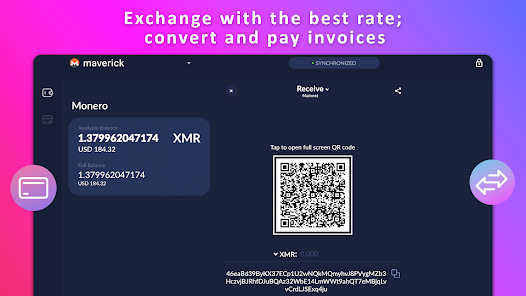
Imagine Jenna, an independent consultant in Boston. She wants to receive some payments in Monero for its on-chain privacy guarantees, keep a portion of savings in Bitcoin, and occasionally convert between assets inside a single wallet. Her priorities are simple: (1) she must control her keys, (2) she wants to minimize metadata exposure (IP address, transaction graphs), and (3) she expects easy, low-friction swaps when needed. That combination argues for a non-custodial, open-source wallet that supports XMR, BTC, and in-wallet swapping while offering network privacy tools and hardware integration.
Several elements in the wallet stack make material differences for Jenna. Device-level encryption and authentication — for example, Secure Enclave on iOS or TPM on Android — ensures the private keys stored locally are encrypted by hardware. This is not glamorous, but it dramatically raises the bar against device-theft attacks. A short PIN or biometric is not a substitute for a secure seed: it is a local gate controlled by device hardware.
Mechanics that govern privacy and where they break
There are three linked layers to inspect: key custody and architecture, network-level anonymity, and coin- or protocol-specific privacy tools.
Key custody and architecture. Non-custodial, open-source designs mean your seed phrase and private keys never leave the device or the air-gapped hardware you pair with. That satisfies Jenna’s first rule: exclusive control. But custody alone doesn’t guarantee unlinkability. For Monero, ensuring the private view key never leaves the device is essential; it prevents a third party from observing incoming transactions. Cake Wallet implements this: Monero keys remain local, and the app supports subaddresses — per-payment addresses that avoid address reuse and reduce linkage. Remember: control without correct key handling (exposing a view key, uploading the seed, or using a shared node) can destroy privacy.
Network privacy and anonymity. Tor-only mode, I2P proxy support, and the ability to connect to custom nodes are not optional extras for privacy-conscious users; they’re the mechanisms that sever on-chain activity from IP-level attribution. If Jenna connects directly to public nodes, her home IP could be correlated with transactions. Running through Tor or an I2P proxy — or better, running a personal node — reduces that risk. But no network layer is a magic bullet: Tor can be misconfigured, exit nodes can be targeted, and connecting to a poorly managed custom node can introduce other privacy leaks. The practical trade-off is latency and occasional connection instability in exchange for a much lower metadata profile.
Protocol-level privacy tools. For Bitcoin, tools like PayJoin v2, Silent Payments, UTXO coin control, and batching provide measurable privacy improvements by breaking simplistic input-output linkages. For Litecoin, optional MWEB adds a MimbleWimble privacy layer. For Zcash, enforcing mandatory shielding prevents transparent address leaks when sending funds. Monero’s privacy model is intrinsic — ring signatures, stealth addresses, and confidential transaction amounts — but wallet-level choices determine how much of that privacy is preserved (for example, background synchronization and subaddresses improve usability without weakening privacy). Each coin requires a different operational discipline: mixing techniques and UTXO management matter for BTC; subaddress hygiene and view key secrecy matter for XMR.
Built-in exchange: convenience versus surface area of attack
On-wallet swaps provide huge convenience: instant conversion between XMR, BTC, ETH, and other assets via decentralized routing (e.g., NEAR Intents) without redirecting users to a centralized exchange. For Jenna, being able to swap inside the app reduces friction and the need to transfer funds to outside services that log identity. But it increases the attack surface: exchanges and routing logic may require additional signing steps, expose metadata to market makers, or leak timing information unless designed carefully. The trade-off here is clear: convenience and reduced custodial risk on the user side versus a broader set of counterparties seeing transaction flows. A prudent rule is to limit large or sensitive swaps to times when you’re connected through Tor and to split large swaps into several smaller operations if you are concerned about slippage or linking.
Hardware integration and air-gapped safety
Hardware wallets like Ledger or air-gapped solutions reduce software-layer risk. Cake Wallet’s support for Ledger and its own air-gapped Cupcake solution means Jenna can sign transactions offline while keeping the keys physically isolated. In practice, hardware integration reduces the risk of remote compromise but doesn’t protect against all human errors: a compromised display, insecure QR-scanning practices, or careless backup storage can still leak seeds. The mitigation is operational: always verify addresses on the hardware device’s screen, never photograph seeds, and store backups in physically separate, secure locations.
What often gets misunderstood — and the sharper mental model
Misconception: “Monero transactions are inherently private, so any wallet is fine.” Correction: Monero’s protocol provides strong default privacy, but wallet and network choices determine whether that privacy materializes in practice. The mental model to hold is layered defenses: cryptographic privacy (protocol), key custody (local vs. remote), network anonymity (Tor/I2P/custom nodes), and user behavior (address reuse, backups). Weakness in any layer can amplify attack vectors elsewhere. Prioritize the weakest link, not the most visible feature.
Another frequent mistake: conflating zero-telemetry policy with real privacy. A developer’s no-telemetry pledge prevents the project from collecting data, but it doesn’t stop the blockchain or network from providing metadata, nor does it stop third-party market makers in swaps from observing trades. That pledge must be combined with network privacy tools and non-custodial design to be meaningful.
Decision-useful heuristics you can apply tonight
1) Verify the private view key never leaves your device for Monero wallets and avoid exporting it. 2) Enable Tor-only mode or use a trusted proxy for any send/receive operations involving privacy-sensitive amounts. 3) Use subaddresses for each payer or merchant to minimize reuse. 4) For Bitcoin, enable PayJoin and use UTXO controls to avoid accidental consolidation of separate sources. 5) When swapping, prefer the in-wallet decentralized routing path when it preserves custody and uses decentralized intents, but split large swaps and check counterparties or routing transparency if you need the highest confidentiality.
These heuristics are not perfect guarantees, but they prioritize operational steps that cut the most common failure modes.
Limitations, unresolved issues, and what to watch next
There are non-trivial limits you must accept. Tor and I2P add latency and occasional connectivity failures. Hardware wallets greatly reduce many risks but add complexity and require careful verification workflows. In-wallet swaps lower custody risk but may expose metadata to market makers — the exact privacy profile depends on which decentralized routing and liquidity providers are used. For Zcash users, known migration problems from certain wallets (e.g., Zashi seed incompatibilities) show that cross-wallet compatibility remains a fragile area.
Signals to monitor: improvements in decentralized routing transparency, broader adoption of privacy-preserving swap protocols, and tighter integration between hardware wallets and privacy-preserving network stacks would all materially reduce trade-offs. Conversely, regulatory pressure that targets privacy tools could force changes in how wallets implement network features; watch policy debates and compliance requirements in the U.S. and major markets.
FAQ
Q: If Monero already hides amounts and addresses, do I need Tor or an air-gapped device?
A: Yes. Monero’s cryptography hides on-chain linkages, but your IP address and device behavior can still identify you. Tor or I2P reduces network-level linkage. Hardware or air-gapped devices reduce software-layer key theft. Both protect different attack surfaces; use them together for the best practical privacy.
Q: Are in-wallet swaps less private than using a decentralized exchange?
A: It depends. In-wallet decentralized routing (for instance, using NEAR Intents) can reduce custodial exposure compared with centralized exchanges, and keeps keys local. But routing paths involve market makers who may see transaction metadata. If absolute counterparty opacity is required, consider splitting swaps, using multiple routers, or performing parts of the exchange through privacy-preserving on-chain protocols — accepting the extra operational work.
Q: How should I backup my Monero wallet seed safely in the U.S.?
A: Use an offline, written backup stored in a secure location (fireproof safe, split geographically if desired). Avoid digital photos or cloud backups. Consider using a metal backup for durability. If you split your seed (Shamir or manual splits), ensure you understand the recovery process and legal/privacy implications of where shared parts are stored.
Q: Is open-source code sufficient to trust a wallet?
A: Open-source is necessary but not sufficient. It enables audits and community scrutiny, which matter for correctness and backdoor detection. However, supply-chain attacks, binary build discrepancies, or misconfiguration by the user can still create risks. Prefer wallets with reproducible builds, active audits, and transparent development practices.
Final practical link: if you’re exploring a capable, multi-currency privacy wallet with Monero support and the kinds of features discussed above — local key custody, Tor/I2P options, hardware integration, and in-wallet swaps — consider reviewing the detailed feature set at this monero wallet resource as part of your selection process. Use the heuristics above to audit any candidate: inspect network settings, confirm key handling, and practice a small test transfer before committing larger holdings.
Privacy is not a single setting; it’s an operational posture. The wallet you choose should make good choices easy and risky choices hard. If it doesn’t, the cryptography on the chain won’t save you.